Twin Cities Hail Damage: Check These Home Insurance Terms Before Storm Season
Updated November 6, 2026
Updated October 2026
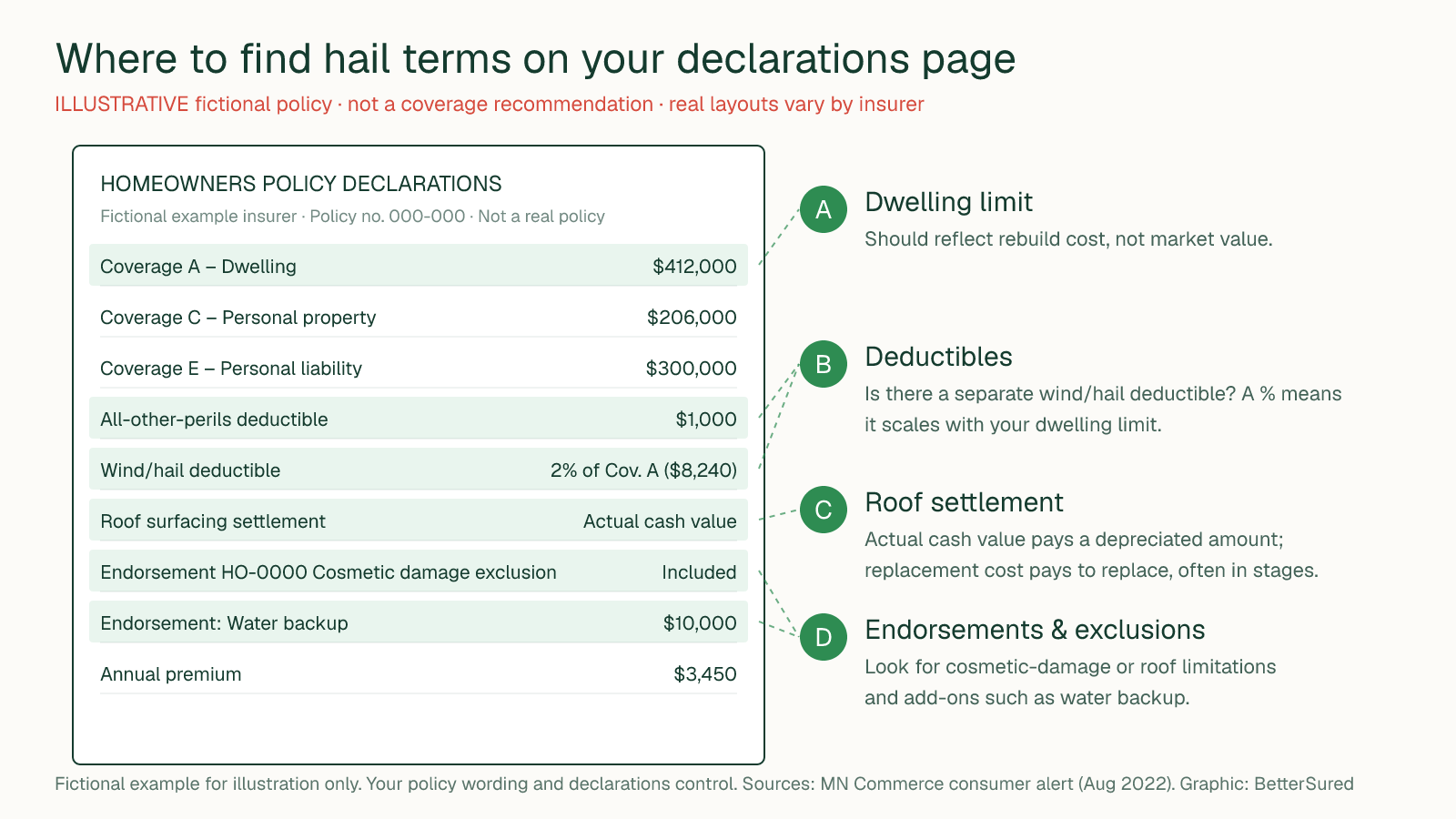
The short answer: Before the next hailstorm, find four things in your homeowners policy: your wind/hail deductible, how your roof is settled (replacement cost or actual cash value), any cosmetic-damage or roof exclusions, and whether your dwelling limit matches today's rebuild cost. These terms decide what you pay out of pocket after hail, and many Minnesota policies have changed them in recent years. Wording varies by insurer, so your own policy is the final word.
Why hail matters so much in the Twin Cities
Hail is a regular, not rare, event here. On May 19, 2022, a storm dropped quarter- to golf-ball-sized hail across Minneapolis, St. Paul, the northern suburbs and central Washington County, causing roof, siding and car damage estimated at $2.6 billion as of October 2023, according to the Minnesota DNR. National Weather Service data cited by the Minneapolis Fed show 581 reports of hail an inch or larger in Minnesota in 2022 and 350 in 2023, against a 10-year average of 301.
Because so many homes are concentrated in the metro, one storm can produce a wave of claims, which is one reason insurers have reworked how they cover roofs. Past storm paths do not predict where the next one will hit; every Twin Cities neighborhood should plan for hail.
The four terms to find on your declarations page
The annotated example at the top of this page shows where these usually appear. It is a fictional policy for illustration, not a recommendation; real layouts and wording vary by insurer.
| Term | Where to look | Question to answer |
|---|---|---|
| Dwelling limit (Coverage A) | Coverage summary | Would it rebuild your home at today's costs? |
| Wind/hail deductible | Deductibles section | Is it separate from your regular deductible? Flat or a percentage? What is it in dollars? |
| Roof settlement | Deductibles, endorsements or a roof schedule | Replacement cost or actual cash value? Does it depend on roof age? |
| Endorsements and exclusions | Forms list (codes such as "HO" plus a number) | Is there a cosmetic-damage exclusion or roof surfacing limitation? |
Wind and hail deductibles, in dollars
The Minnesota Department of Commerce has warned that some policies now have a separate, higher deductible for wind and hail, either a flat amount or a percentage of the home's insured value. A percentage deductible grows with your dwelling limit:
| Dwelling limit | 1% deductible | 2% deductible |
|---|---|---|
| $300,000 | $3,000 | $6,000 |
| $400,000 | $4,000 | $8,000 |
| $500,000 | $5,000 | $10,000 |
Commerce's advice is to "consider the math": a percentage deductible may lower your premium, but compare that saving with what you would pay after a storm. If you could not comfortably cover the amount, ask about a flat or lower option. Our explainer on how deductibles work walks through the trade-off.
Roof settlement and cosmetic damage
Replacement cost vs. actual cash value
- Replacement cost pays to repair or replace damaged roofing with similar materials, minus your deductible. It does not mean unlimited: payments are capped by your limits, many insurers pay an initial depreciated amount and release the rest after the work is done, and upgrades required by building codes may need separate ordinance-or-law coverage. Check how your policy handles each.
- Actual cash value subtracts depreciation for the roof's age and wear. On an older roof, the payment after your deductible can be a small share of the replacement cost.
Cosmetic-damage exclusions
Commerce reports that some carriers now use language that excludes wind and hail damage unless shingles or siding are punctured or torn and no longer keep water out. Dents that only affect appearance, such as on metal roofs, gutters or siding, may not be covered. Commerce notes that state law does not address these exclusions, so the specific wording in your policy decides.
Before the storm: a home inventory and baseline photos
- Take dated photos or video of your roof, siding, gutters, windows and outdoor equipment from the ground, plus each room and major belongings.
- Keep records of your roof's age and materials (invoice, permit or inspection), since roof age can affect settlement.
- Store your policy, declarations page and photos in cloud storage you can reach from your phone.
- Know your agent's or insurer's claim number and how to report a loss.
After the storm: document safely
Do not climb onto a roof after a storm. Photograph from the ground or a safe window, note the date and time, and photograph hailstones next to a ruler or coin if you can do it safely. The Department of Commerce recommends documenting damage before cleanup, making temporary repairs such as tarping to prevent further damage, and keeping receipts. Our step-by-step hail claim guide covers what to do next, in order.
Contractor and claim cautions
- Use a licensed contractor. The Minnesota Department of Labor and Industry has tips for hiring a contractor after a storm, including checking licenses.
- Be wary of door-to-door offers, high-pressure tactics or anyone who claims to be from a government agency.
- Read anything you sign carefully, especially if it lets a contractor or adjuster negotiate with your insurer. If you hire a public adjuster, Commerce advises checking registration and getting the fee in writing.
- Have your insurer's adjuster inspect before permanent repairs, unless you are told otherwise.
Storm-season checklist
Free to print and share with neighbors or your neighborhood association, with credit to BetterSured.
| Done | Task |
|---|---|
| ☐ | Find your wind/hail deductible and convert it to dollars |
| ☐ | Confirm roof settlement: replacement cost or actual cash value |
| ☐ | Check for cosmetic-damage or roof surfacing exclusions |
| ☐ | Confirm your dwelling limit reflects rebuild cost |
| ☐ | Take dated ground-level photos of roof, siding and gutters |
| ☐ | Save roof age records and your declarations page to the cloud |
| ☐ | Save your insurer's claim phone number in your phone |
| ☐ | Set aside enough savings to cover your deductible |
Compare policy terms before renewal
The best time to change hail terms is before a storm, at renewal. When you compare quotes, line up the deductible, roof settlement and exclusions, not just the price. Our guide to comparing homeowners insurance in Minneapolis, St. Paul and nearby suburbs includes a worksheet. If your renewal premium jumped, see why Minnesota home insurance went up. Condo and townhome owners should also read our guide to what the association policy may not cover, since roof damage can lead to an association deductible or assessment.
Related Minnesota guides
- Minnesota home and auto insurance cost guide
- Hail damage to your Minnesota home: how to document it and start a claim
- Why did my Minnesota home insurance go up?
Compare quotes with the same hail terms
BetterSured reads your current declarations page so quotes are built on the same limits and deductibles, then vetted local independent brokers compete to quote that coverage. Ask the brokers to match or explain any difference in wind/hail deductible and roof settlement. Brokers pay BetterSured for these requests, your details go only to the brokers who quote you, and a lower price is not guaranteed.
Related guides
Water Damage vs. Flood Insurance: What Your Standard Home Policy Covers
Actual Cash Value vs. Replacement Cost: Understanding Your Property Coverage
Condo Insurance (HO-6) vs. HOA Master Policy: What Coverage Do You Actually Need?
Condo and Townhome Insurance in Minnesota: What the Association Policy May Not Cover