Hail Damage to Your Minnesota Home: How to Document It and Start a Claim
Updated November 6, 2026
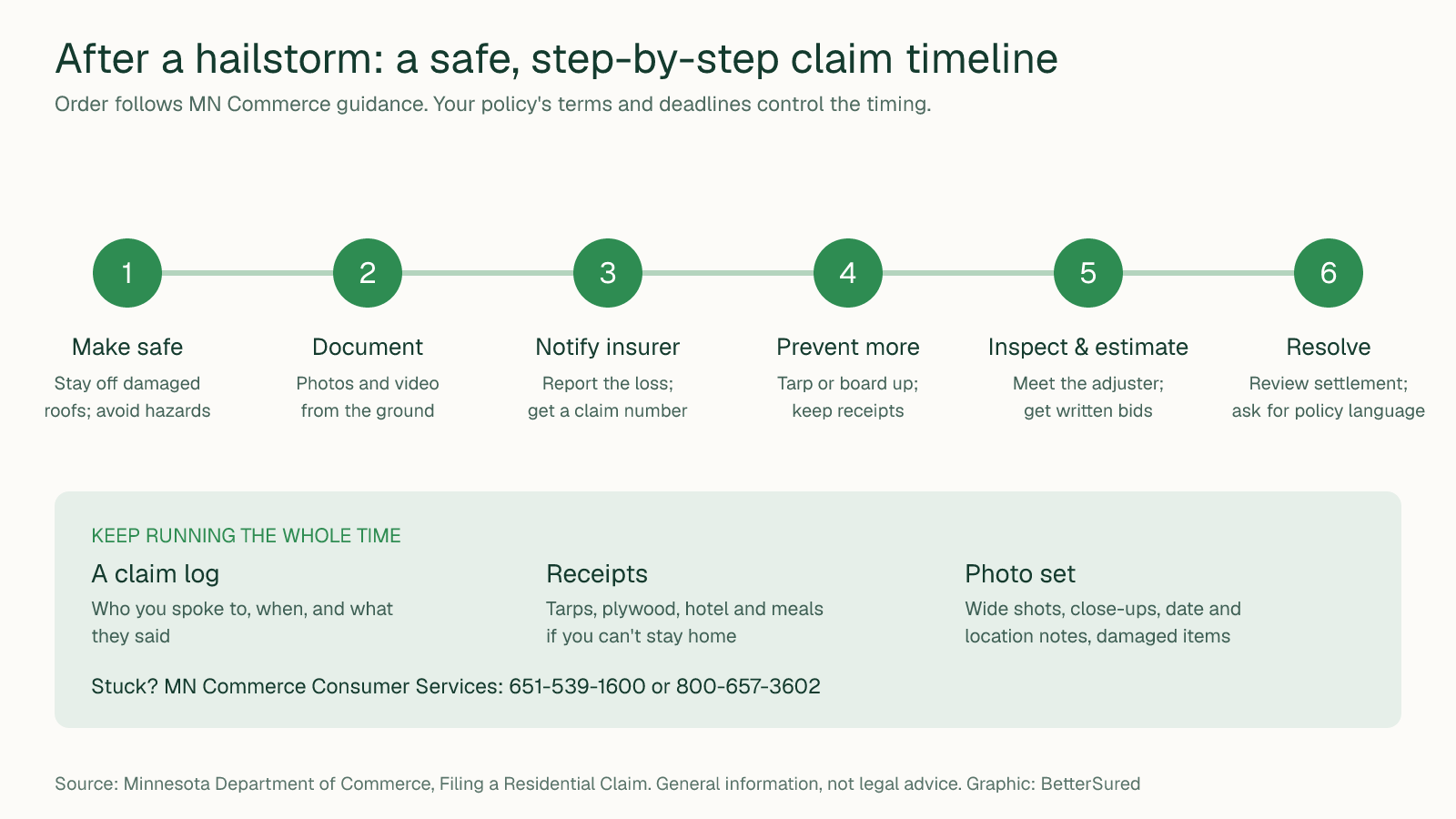
Updated October 2026. General information; your policy's terms and deadlines control.
The short answer: After hail, stay safe and off the roof, photograph the damage from the ground, report the loss to your agent or insurer, and make only temporary repairs (such as a tarp) to stop further damage, keeping every receipt. Wait for the insurer's adjuster before permanent repairs, keep a log of every conversation, and contact the Minnesota Department of Commerce if you can't resolve a dispute. The timeline at the top of this page shows the order at a glance.
First: is there damage worth a claim?
Not every storm causes covered damage. Look for broken windows, leaks, torn or missing shingles, and dents or cracks in siding, gutters and vents. Compare the likely repair cost with your deductible, including any separate wind/hail deductible, which may be a percentage of your dwelling limit. If the damage is minor or below your deductible, a claim may not make sense; our guide on when to file a claim walks through the trade-off. Your agent can also tell you how a reported loss is handled before you decide.
Step by step
1. Make it safe
- Do not climb onto a damaged roof. Wet, dented or broken roofing is dangerous; leave inspections to professionals with proper equipment.
- Stay away from downed power lines and damaged trees.
- If water is coming in near electrical fixtures and it is safe to reach the panel, Commerce advises shutting off the electricity.
2. Document before you clean up
Commerce stresses documenting all damage before cleanup. From the ground or a safe window, capture:
- Wide shots of each side of the house, roof and outbuildings
- Close-ups of damage to siding, gutters, windows, screens, vents and outdoor equipment
- Interior damage such as ceiling stains or leaks
- A date and location note: a phone photo's timestamp works, or write it in your log
- Hailstones next to a ruler or coin, if you can do it safely soon after the storm
Don't throw out damaged items, other than spoiled food, until the adjuster has seen them.
3. Report the loss
Call your agent, or your insurer if you don't have one, to report the loss and get a claim number. Follow the instructions you're given and any notice deadlines in your policy. Ask for a complete copy of your policy if you don't have one.
4. Prevent further damage, and keep receipts
Make temporary, inexpensive repairs such as tarping the roof or boarding a broken window. Commerce warns that additional damage you could have prevented may not be covered. Save receipts for materials and labor so you can seek reimbursement. If you can't stay in your home, keep receipts for hotel and meal costs too; additional living expenses may be covered.
5. Meet the adjuster and get estimates
Wait for the insurer's adjuster before permanent repairs, unless you're told otherwise. Commerce suggests asking the adjuster for:
- A business card or identification
- What you need to do next, and what the insurer will do next
- Whether you or the insurer will get repair estimates
- An estimated timeline for the claim
- An advance for living expenses if your home isn't livable
Get written estimates from licensed contractors you choose. Check licenses with the Minnesota Department of Labor and Industry, which offers tips for hiring a contractor after a storm. Be cautious with door-to-door offers, pressure to sign quickly, or anyone who claims to be from a government agency, and read anything that would let a contractor deal with your insurer for you.
6. Review the settlement
Compare the insurer's estimate line by line with your contractor's. If you disagree, ask for the specific policy language involved and a written explanation. Commerce advises not rushing into a settlement and being prepared to negotiate. Some policies pay replacement-cost claims in stages, holding back part of the payment until repairs are finished; ask how yours works.
Keep running the whole time
| Record | What to include |
|---|---|
| Claim log | Date, person, company and a summary of every call or visit; questions asked and answers given |
| Photo and video set | Wide shots, close-ups, interior damage, damaged belongings, dates and locations |
| Receipts | Tarps, boards, emergency labor, hotel and meals if displaced |
| Documents | Full policy, declarations page, claim number, estimates, adjuster's report, settlement letters |
| Home inventory | List and photos of damaged belongings, with receipts or other proof of value where possible |
If you're thinking about a public adjuster
A public adjuster works for you, usually for a percentage of the settlement; you are not required to hire one. Commerce advises checking that the adjuster is registered with the department, getting a written contract that spells out all fees, and avoiding anyone who says their services are mandatory, uses high-pressure tactics or won't provide a written contract.
If your claim is denied or stuck
- Reread your policy's coverage and exclusions, including any wind/hail deductible and cosmetic-damage language.
- Ask the insurer for a written explanation that cites the specific policy language.
- If you still can't resolve it, contact the Minnesota Department of Commerce Consumer Services Center at 651-539-1600 or 800-657-3602, or email consumer.protection@state.mn.us. Staff work to resolve disputes between consumers and insurers informally, and you can file a complaint. See Commerce's residential claim guidance.
One-page hail claim checklist
Free for neighborhood associations and preparedness groups to print and share, with credit to BetterSured and the Minnesota Department of Commerce.
| Done | Step |
|---|---|
| ☐ | Stay off the roof; avoid power lines and hazards |
| ☐ | Photograph and video all damage before cleanup |
| ☐ | Compare likely damage with your deductibles |
| ☐ | Report the loss and write down the claim number |
| ☐ | Make temporary repairs; keep receipts |
| ☐ | Start a claim log |
| ☐ | Meet the adjuster; get licensed contractors' estimates |
| ☐ | Review the settlement; ask for policy language on any disagreement |
| ☐ | Contact Commerce if you can't resolve a dispute |
Condo and townhome owners
If you live in an association, roof and siding damage may fall under the association's master policy, and you may receive an assessment for its deductible. Contact your association as well as your own insurer, and see our guide to what the association policy may not cover.
Related Minnesota guides
- Minnesota home and auto insurance cost guide
- Review Minnesota wind and hail coverage before storm season
- Why did my Minnesota home insurance go up?
- How to file a homeowners insurance claim: a general guide
After the claim: review your coverage
Once repairs are done, check that your new roof and any upgrades are reflected in your policy, and whether your hail deductible and roof terms still suit you. If you decide to compare, BetterSured reads the declarations page you upload so quotes match your current coverage, and vetted local independent brokers compete to quote it. Brokers pay BetterSured for these requests, your details go only to the brokers who quote you, and a lower price is not guaranteed.
Related guides