Inflation Guard Endorsement: Protecting Your Home Against Rising Rebuild Costs
Updated November 6, 2026
The cost to rebuild the average American home has surged. National residential reconstruction costs — materials plus retail labor — rose 63.7% in the decade ending October 2024, according to Verisk's construction-cost analysis (Carrier Management / Verisk, 2024). Yet many homeowners are still insured for what it cost to rebuild years ago.
The gap is real and it's expensive. A 2025 University of Colorado study of homes lost in the Marshall Fire found that 74% of owners were underinsured, with an average coverage shortfall of about $139,000 (CU Boulder, 2025). One of the quietest, most effective tools for staying ahead of this is the inflation guard insurance endorsement.
Market value vs. reconstruction cost
The single biggest source of confusion in home insurance is the difference between what your home would sell for and what it would cost to rebuild. They are not the same number, and they often move in opposite directions.
Market value reflects the housing market — location, school district, lot desirability, and buyer demand. It includes the value of your land, which never burns down. Reconstruction cost (also called replacement cost) is purely the price of the labor and materials needed to rebuild your home as it stands today, on the same lot. Your dwelling coverage — Coverage A — should be based on reconstruction cost, not market value or your mortgage balance.
Here's why the distinction has become urgent. Building material prices and skilled-trade labor rates climbed sharply over the past several years, pushing reconstruction costs up far faster than many policies adjusted. A home you insured for $400,000 in 2016 might cost well over $600,000 to rebuild today — but the policy limit may have barely moved. If you're fuzzy on how insurers value a rebuild, our explainer on actual cash value vs. replacement cost is worth a few minutes.
The underinsurance this creates is widespread. Beyond the wildfire data, a 2025 survey found roughly 18% of Americans — about 42 million people — believe they are underinsured on their homes (Insurify, 2025), and the true figure is likely higher because most people never recheck their limit.
How an inflation guard endorsement works
An inflation guard endorsement is a small add-on to your homeowners policy that automatically increases your Coverage A dwelling limit by a set percentage on a recurring basis — usually once a year, applied at renewal. You don't have to call, request it, or remember. The limit simply steps up.
Most insurers set the annual bump somewhere between 2% and 4%, though it can run higher in years of steep construction inflation (NerdWallet, 2025). A quick example: if your dwelling is insured for $200,000 with a 4% inflation guard, your limit rises to $208,000 at the next renewal — and your other coverages that are calculated as a percentage of Coverage A (like personal property and other structures) typically rise with it.
A few things to understand about how it behaves:
- It's automatic but modest. Inflation guard is designed to track ordinary, gradual cost increases. It usually nudges your premium up slightly each year too, because you're buying a bit more coverage.
- It's not a full appraisal. A flat 3% or 4% is a reasonable guess, not a measurement. In years where reconstruction costs jump faster than the guard rate, you can still fall behind.
- It pairs well with extended replacement cost. Many homeowners combine inflation guard (steady annual increases) with extended replacement cost coverage (a cushion of 25%–50% above your limit) for genuine protection against surprises.
Coinsurance and the 80% rule
This is where underinsurance quietly bites — even on partial losses. Most homeowners policies contain a coinsurance clause requiring you to carry a limit equal to at least about 80% of your home's full replacement cost. Fall below that threshold and the insurer can reduce your payout on a claim, not just cap it at your limit.
Here's a simplified worked example:
- Your home would cost $500,000 to fully rebuild.
- The 80% requirement means you should carry at least $400,000 of dwelling coverage.
- You actually carry only $300,000 — that's 75% of the required amount ($300,000 ÷ $400,000).
- A kitchen fire causes $100,000 in damage.
- Because you were underinsured, the insurer may pay only about 75% of the loss — roughly $75,000 — leaving you to cover the rest out of pocket, and you still owe your deductible on top of that.
Notice the sting: this wasn't a total loss, yet the coinsurance penalty still reduced the payout. Letting inflation quietly erode your limit below the threshold is exactly how well-meaning homeowners get caught. If deductibles and how they interact with a claim are hazy, our plain-English guide to what a deductible means clears it up.
What the key terms mean
| Term | What it means | Why it matters |
|---|---|---|
| Market value | What your home would sell for, including land | Should not be used to set your dwelling limit — it can be far higher or lower than rebuild cost |
| Replacement (reconstruction) cost | What it costs in labor and materials to rebuild your home as-is today | This is the number your Coverage A limit should be based on |
| Inflation guard | An endorsement that auto-raises your dwelling limit a set % each year | Keeps coverage drifting upward with costs without you lifting a finger |
| Coinsurance (80% rule) | A requirement to insure to ~80% of replacement cost or face a reduced payout | Being underinsured can shrink even partial-loss claims, not just total losses |
| Extended replacement cost | A buffer (often 25%–50%) that pays above your stated limit | Backstops you when rebuild costs spike faster than your limit |
Source: Insurance industry standard definitions; figures per Verisk and NerdWallet (2024–2025).
How often to recheck your replacement cost
Inflation guard handles the slow, steady drift — but it's a formula, not an inspection. You still need a real replacement-cost estimate periodically so the baseline it grows from stays accurate. A practical schedule:
- Every renewal: Read the declarations page and confirm your Coverage A limit still looks sensible against today's local build costs.
- Every 2–3 years: Ask your agent to run a fresh professional replacement-cost calculation (many carriers use estimator tools that price local labor and materials).
- After any major change: A renovation, addition, finished basement, new kitchen, or upgraded finishes all raise rebuild cost immediately — update the limit right away, don't wait for renewal.
Buying or moving into a different home is another natural checkpoint. If you've recently relocated, our look at why a new home in the same town can change your premium explains how rebuild cost drives the number. And when you're shopping coverage from scratch, the homeowners insurance checklist walks through getting the dwelling limit right from day one.
Demand surge after a disaster
There's one scenario a modest annual inflation guard can't fully absorb: demand surge. When a hurricane, wildfire, or hailstorm damages thousands of homes in one region at once, local contractors, roofers, and lumber suppliers are suddenly overwhelmed. Prices for labor and materials spike temporarily — sometimes sharply — precisely when everyone in the area needs to rebuild at the same time.
A home insured "correctly" at last year's costs can end up underinsured overnight in a post-disaster market. This is why the strongest protection stacks three layers: an accurate replacement-cost baseline, an inflation guard endorsement to keep it climbing, and extended (or guaranteed) replacement cost coverage to absorb the demand-surge spike above your limit. If broad rate increases are also squeezing your budget, our piece on why insurance rates are going up puts the trend in context.
Frequently asked questions
Does an inflation guard endorsement raise my premium?
Usually yes, but modestly. Because your dwelling limit rises a few percent each year, you're buying slightly more coverage, so the premium ticks up in step. Most homeowners find the small cost well worth avoiding a large coverage gap.
Is inflation guard the same as replacement cost coverage?
No. Replacement cost coverage governs how a claim is paid (rebuild cost, not depreciated value). Inflation guard is a separate feature that adjusts your dwelling limit upward over time. Many strong policies include both.
How much dwelling coverage do I actually need?
Enough to fully rebuild your home at today's local labor and material prices — ideally with a cushion. At a minimum, carry at least 80% of full replacement cost to avoid a coinsurance penalty, though insuring to 100% (plus extended replacement cost) is safer.
Will inflation guard alone keep me fully covered?
Not always. A flat 3%–4% annual bump can lag behind years of steep construction inflation or a post-disaster demand surge. Use it alongside a periodic professional replacement-cost recalculation rather than as your only safeguard.
What happens if I'm underinsured when I file a claim?
Your payout can be capped at your limit and, under a coinsurance clause, reduced further if you carried less than the required percentage of replacement cost. See our guide on how to file a homeowners insurance claim for what to expect.
The bottom line
Reconstruction costs have climbed faster than most policies have kept pace, and the result is millions of homes quietly underinsured against the exact disaster their coverage is meant to handle. An inflation guard endorsement is a low-effort way to keep your dwelling limit drifting upward with those costs — but it works best on an accurate foundation. If it's been more than a couple of years since anyone actually measured what your home would cost to rebuild, now is a good time to ask your agent for a fresh replacement-cost recalculation and confirm your limit still fits.
Related guides
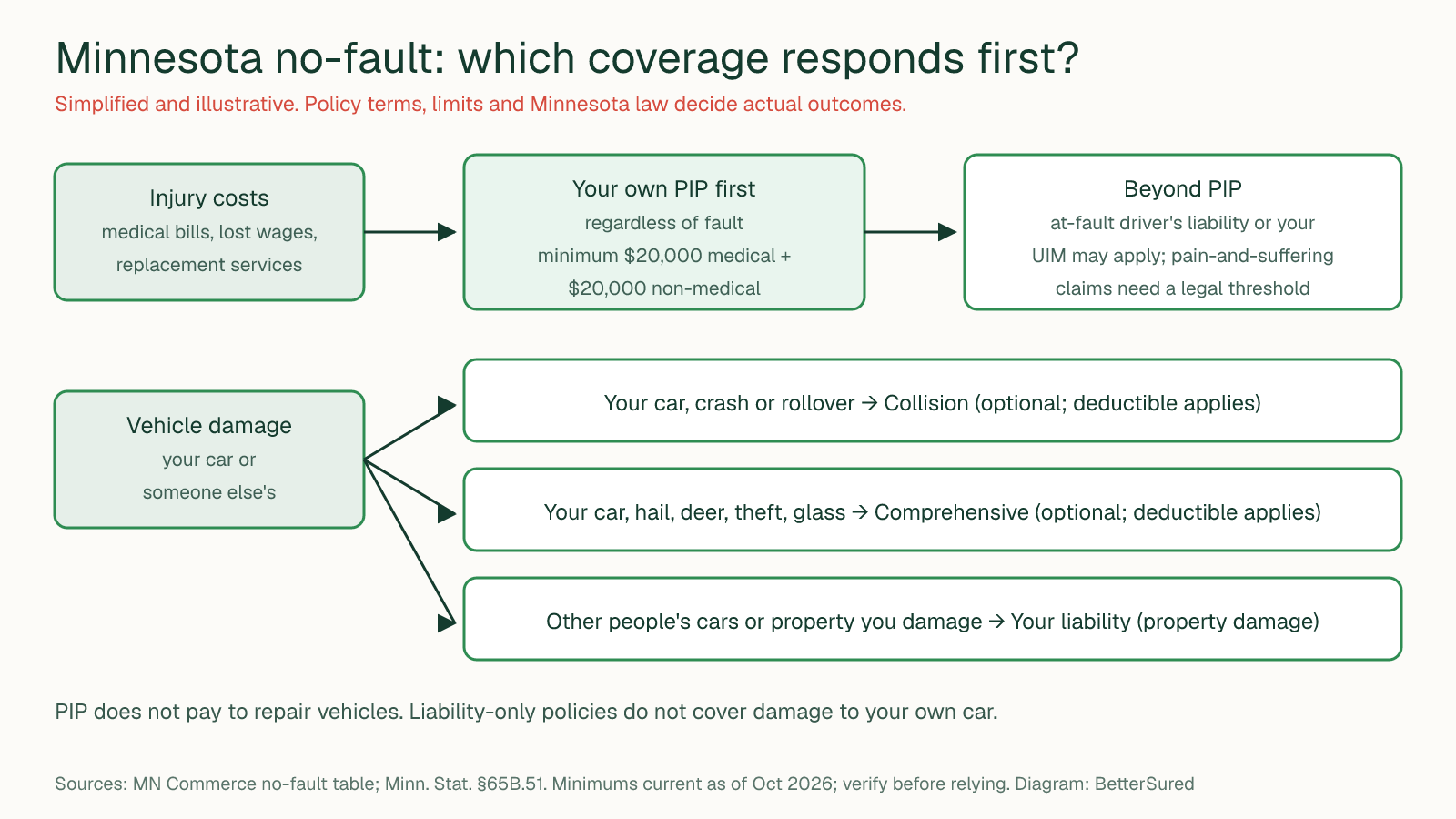
Minnesota No-Fault Auto Insurance Explained: PIP, Minimums, and What It Covers
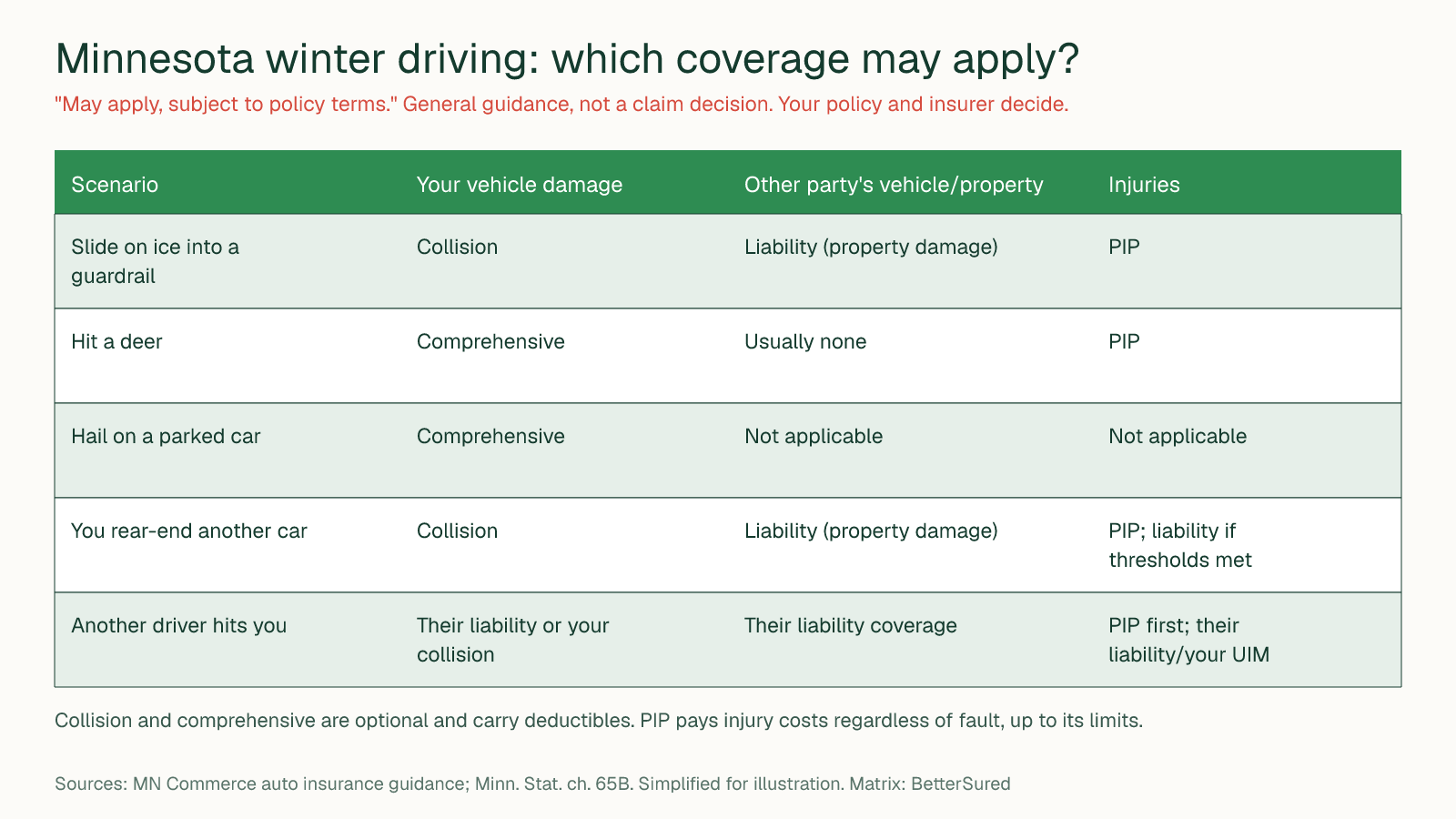
Minnesota Winter Car Insurance: What Covers a Crash, Deer Strike, or Hail Damage?
What Is Loss Assessment Coverage? Protecting Yourself from HOA Special Assessments
Does Getting a Dog Raise Your Home Insurance? What Dog Owners Should Know