What Is Loss Assessment Coverage? Protecting Yourself from HOA Special Assessments
Updated October 18, 2026
Your condo association's master policy took the hit after a storm tore through the building. The claim was paid. Then a letter arrives: every unit owner owes $3,000 to cover the deductible the association could not absorb. That is a special assessment, and it is one of the most common ways condo owners get blindsided by a five-figure bill they never budgeted for.
A small endorsement on your condo policy is built for exactly this moment. Many standard condo policies include only about $1,000 of loss assessment protection by default, while a fuller endorsement generally runs from $10,000 to $100,000 depending on the insurer, according to Insurify, 2026. The gap between those two numbers is the difference between a covered claim and a surprise out of your own pocket.
What is loss assessment coverage?
Loss assessment coverage is an endorsement on your HO-6 condo policy that pays your individual share of a special assessment charged by your homeowners association (HOA) or condo association. When the association's own insurance is not enough to cover a loss to shared property or a liability judgment, the board can legally divide the shortfall among all unit owners. Your loss assessment coverage steps in to pay your slice.
The key thing to understand is the two-policy structure of condo living. The association carries a master policy for the building, roof, hallways, elevators, and other common areas. You carry your own HO-6 policy for everything inside your walls. Loss assessment coverage is the bridge between them, catching the costs that the master policy passes down to you as an owner.
What triggers an HOA special assessment
A special assessment is not a routine dues increase. It is a one-time charge levied when the association faces a cost its master policy and reserves cannot fully absorb. Three situations trigger these assessments most often:
- A common-area loss that exceeds the master policy limits. A fire in the lobby, storm damage to the roof, or destruction of a shared clubhouse can cost more to rebuild than the master policy will pay. The overage gets assessed to owners.
- A large master-policy deductible split among owners. This is the most frequent trigger. Master policy deductibles commonly range from $5,000 to $50,000, per Forbes Advisor, 2023, and hurricane deductibles can run far higher as a percentage of the building's insured value. When the association files a claim, that deductible is not covered by their insurer, so it flows straight to unit owners.
- A liability judgment against the association. If someone is seriously injured in a common area, such as a pool deck or parking garage, and wins a judgment larger than the master policy's liability limit, owners can be assessed for the difference.
How the endorsement pays your share
When the association issues a valid special assessment tied to a covered peril, you file a claim on your own policy and your loss assessment endorsement reimburses your portion, up to your chosen limit. Because the loss originated with the master policy, the covered causes generally mirror standard homeowners perils, things like fire, wind, theft, and liability. It does not cover routine maintenance projects, reserve shortfalls, or cosmetic upgrades the board decides to pursue.
There is one trap worth flagging. When the assessment exists specifically to pay the master policy's deductible, most policies apply a separate, much smaller sub-limit, frequently just $1,000, regardless of how high your overall loss assessment limit is. Some states have written this $1,000 deductible-assessment cap into statute. So a homeowner who proudly carries a $50,000 loss assessment limit can still be left paying thousands out of pocket if the assessment is purely a deductible pass-through. It pays to ask your agent whether your policy raises that specific sub-limit.
Real-world scenarios
These are not hypothetical edge cases. Two patterns show up again and again.
The hurricane deductible pass-through. A coastal building suffers wind damage. The master policy pays for repairs, but its hurricane deductible is $250,000, calculated as a percentage of the building's value. With 100 units, the board assesses each owner $2,500 to cover it. Owners with adequate loss assessment coverage file and get reimbursed; owners relying on the built-in $1,000 are largely on their own. This is also why it is worth understanding how your building handles water damage versus flood, since coverage gaps there frequently end up as assessments.
The common-area liability judgment. A guest is badly hurt on a poorly maintained stairwell and is awarded $1.5 million. The master policy's liability limit is $1 million. The remaining $500,000, plus legal costs, gets divided among unit owners. Illustrating the math, Insurify describes a $60,000 uncovered loss split across 20 units producing a $3,000 charge per owner.
How much loss assessment coverage do you need
The built-in amount on most policies is almost never enough. Here is how the baseline compares with what specialists actually recommend, and how the different triggers get paid.
| Trigger | Who pays first | How loss assessment steps in | Typical limit needed |
|---|---|---|---|
| Common-area damage above master limits | Association master policy | Pays your assessed share of the overage | $10,000–$50,000 |
| Master-policy deductible split among owners | Association files claim; owners absorb deductible | Pays your share, but often capped near a $1,000 sub-limit | Raise the deductible sub-limit if offered |
| Common-area liability judgment | Master policy liability coverage | Pays your share of the excess judgment | $25,000–$50,000 |
| Built-in default on a standard HO-6 | You | Only about $1,000, property assessments only | Upgrade recommended |
Source: Insurify, 2026; Forbes Advisor, 2023; Policygenius, 2024.
The good news is that better limits cost very little. Raising your loss assessment coverage typically adds only $10 to $75 a year to your premium, per Insurify's 2026 figures, and Policygenius put the cost of a meaningful bump at roughly $25 to $50 annually in its 2024 guidance. Against an average condo policy that runs about $490 a year nationally, according to NerdWallet, 2026, that is a rounding error for tens of thousands of dollars of protection. Coverage commonly starts around $5,000 and scales up to $50,000 or more, notes Policygenius, 2024.
One more limitation to know: the built-in default often covers property assessments only, not liability assessments, which is another reason to upgrade rather than lean on the baseline.
Review the master policy every year
The right limit for you depends entirely on your building's exposure, and that changes over time. Make the annual HOA meeting count by checking a few things:
- Ask for the master policy's current coverage limits and, critically, its deductible, including any separate wind or hurricane deductible.
- Divide the master deductible by the number of units to estimate your worst-case share, then set your loss assessment limit above it.
- Confirm whether your policy's deductible-assessment sub-limit can be raised above the standard $1,000.
- Reassess after any renovation, reserve study, or shift in your region's storm risk.
Folding this into your broader annual coverage review keeps the whole picture aligned as your building and its risks evolve.
Frequently asked questions
Is loss assessment coverage worth it?
For most condo and HOA owners, yes. It typically adds only $10 to $75 a year yet can shield you from an assessment running into the thousands or tens of thousands. Given the small cost, it is one of the highest-value endorsements on a condo policy.
How much loss assessment coverage should I carry?
Most experts suggest $10,000 to $50,000, and higher in buildings with large master-policy deductibles or significant common-area risk. Base your number on your building's actual master deductible divided by the number of units.
Does it cover the HOA master policy deductible?
Often only partially. Many policies cap the portion tied to the master policy's deductible at a separate sub-limit, frequently around $1,000, even when your overall limit is much higher. Ask your insurer whether that sub-limit can be increased.
What does loss assessment coverage not cover?
It does not cover routine maintenance, reserve shortfalls, cosmetic upgrades, or assessments unrelated to a covered peril. The underlying loss generally has to stem from a cause your policy would otherwise insure, such as fire, wind, or liability.
How do I file a loss assessment claim?
Once the association issues the special assessment in writing, you submit that documentation to your own insurer and file on your loss assessment endorsement. Our step-by-step guide on how to file a homeowners claim walks through the paperwork and timing.
The bottom line
Loss assessment coverage is a small line item that quietly protects you from one of condo ownership's biggest financial surprises. The built-in $1,000 most policies include will not go far when a hurricane deductible or a liability judgment gets split across your building, but raising your limit to $25,000 or $50,000 usually costs less than a nice dinner out per year. If you own a condo or belong to an HOA, it is worth pulling up your policy this week and talking with your agent about adding a loss assessment endorsement that matches your building's real exposure.
Related guides
Inflation Guard Endorsement: Protecting Your Home Against Rising Rebuild Costs
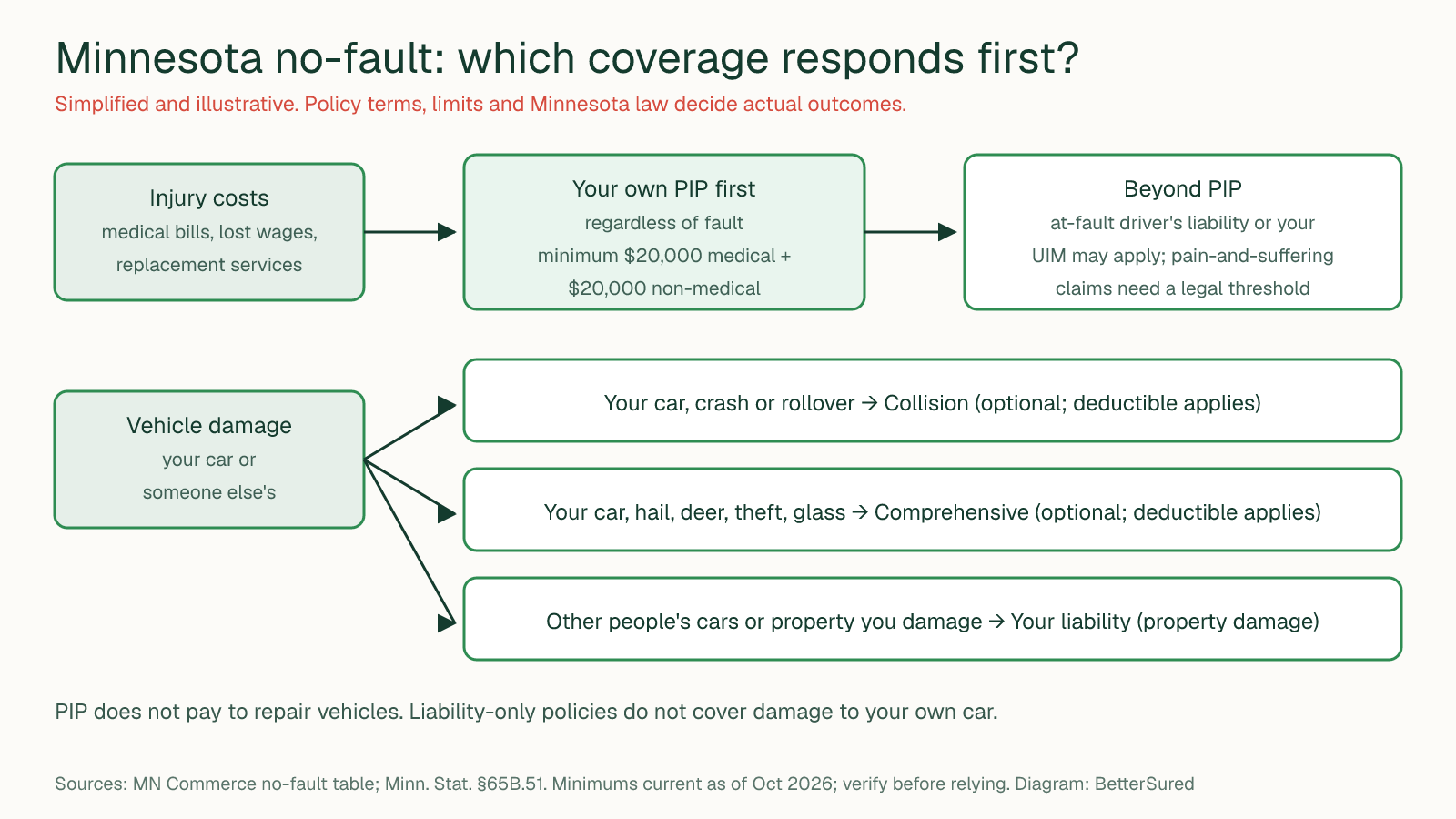
Minnesota No-Fault Auto Insurance Explained: PIP, Minimums, and What It Covers
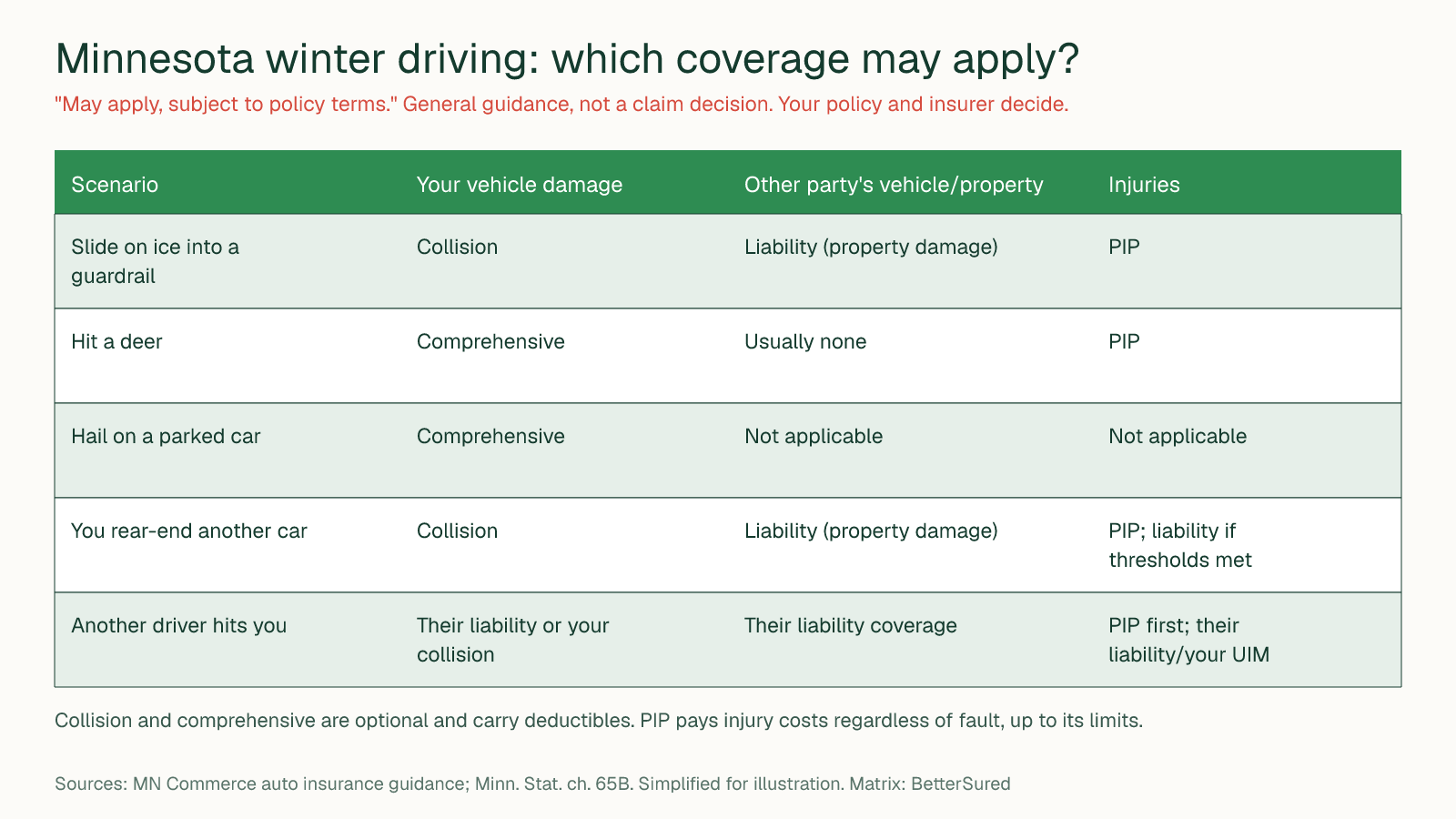
Minnesota Winter Car Insurance: What Covers a Crash, Deer Strike, or Hail Damage?
Does Getting a Dog Raise Your Home Insurance? What Dog Owners Should Know